
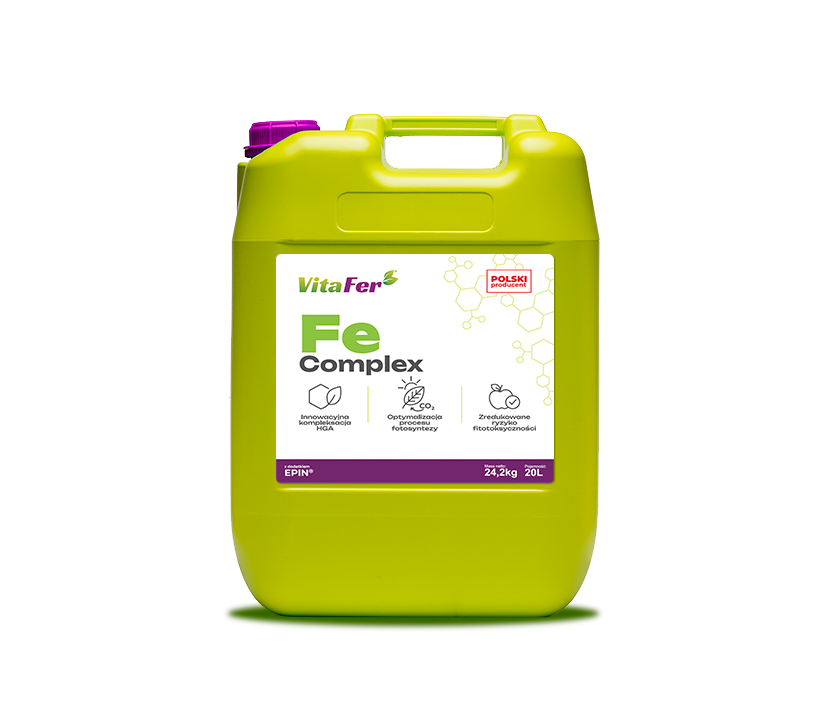
Description
Key effects:
Innovative HGA Complexation
Heptagluconic acid ensures complete iron complexation and maximum bioavailability, reducing the risk of precipitation and loss of nutrient effectiveness.
Reduced Risk of Phytotoxicity
The gentle formulation minimises application-related stress, allowing safe use even at higher rates and shorter application intervals.
Supports Photosynthetic Activity
Supports chlorophyll synthesis and electron transport in photosystems, maximising the efficiency of energy production and CO₂ assimilation.
Wide Application Temperature Range
Effective at temperatures from +5°C to +25°C, providing flexibility of application under variable seasonal conditions.
Improved Yield and Crop Quality
Supports higher yields, improved colour, taste, and nutritional value of fruits, as well as better storage properties.
Composition:
| Micronutrients | % m/m | % m/v |
|---|---|---|
| Iron (Fe) | 5,00 | 6,05 |
The role of iron in crops:
- optimizes the process of photosynthesis, chlorophyll synthesis, lignin synthesis, nucleotide metabolism and cellular respiration
- it influences the proper growth and development of plants, stimulates flowering and fruiting
- it improves the efficiency of nitrogen management by binding free nitrogen and reducing nitrates and stimulates protein production
- it takes part in the metabolism of fatty acids
- it improves the functioning of the symbiosis between plants and bacteria capable of fixing atmospheric nitrogen
Iron deficiencies result in:
- root deformation due to changes in the shape of parenchyma cells
- chlorosis of apical leaves, dying of shoots and branches in fruit and nursery crops.
- plant growth is inhibited, plants affected by the deficiency show reduced vitality and reduced ability to produce flowers and fruits
- deterioration of storage properties and deterioration of quality parameters of the crop
Dosages and timing of administration:
| Crop | Rate (l/ha) | Applications |
|---|---|---|
| Field crops | 0,75-1,5 | 1–2 applications in spring during periods of intensive growth |
| Fruit and berry crops | 0,75-1,5 | 1–2 applications from the intensive growth stage until the beginning of flowering / fruit development |
| Vegetables | 0,75-1,5 | 3–4 applications during periods of intensive growth |
| Fertigation | 0,25% | Depending on the needs of the crop |


